
- Kingdom - Animalia
- Phylum - Mollusca
- Class - Bivalvia
- Order - Unionoida
- Family - Unionidae
- Species - Pyganodon grandis
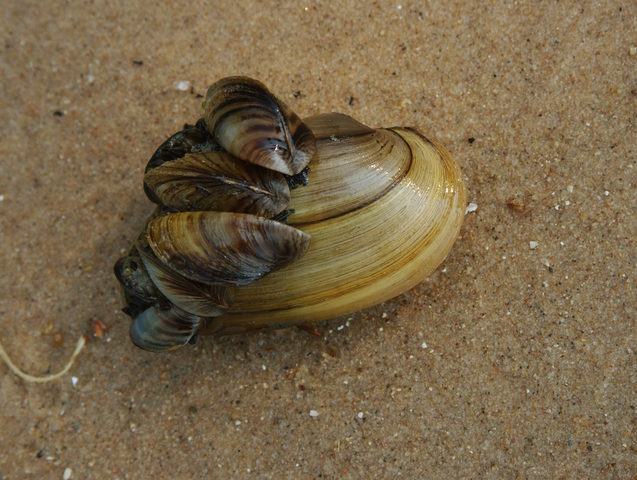
- A giant floater, parasitic to fish in their glochidia age, but fall off after becoming the filter-feeding juvenile.
A two shelled mollusks that are bilaterally symmetrical, typically elliptical, with the oldest part of the shell being the umbo. With a mantel and muscular foot allowing it to eat and move respectively. They breath through gills helped by siphons that move water, some use this for movement.
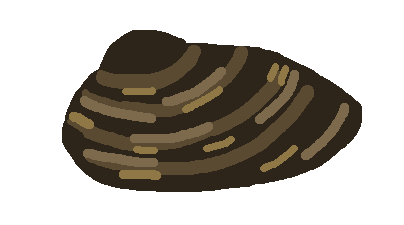
Their large size explains their name. They are elliptical or elongated in shape with their umbos are raised slightly above the hinge. When they are younger their colored in yellow to yellow green, but as they age they darken to more brown colors.
In their adult forms they are filter feeders eating food particles found in the water system. But in their larval Glochidia stage they instead feed off of their host fish.
Breeding once a year, internal fertilization occurs be for the female incubate the eggs in their water tubes. After the eggs hatch the glochidia are then released into the water body where they then attach to the gills or body of a fish. After a few days or weeks the glochidia metamorphoses into a juvenile individual, where it drops off of its host and lives as a free-living organism.
Fresh water marine they spend their time in rivers, creeks, ponds, and lakes. There they provide essential services filtering through the water helping clear the water of excess nutrients.
Eaten by; muckrats, racoons, minks, otters, and some birds. Their juvenile size also allows them to be prey for; freshwater drum, sheepshead, lake sturgeon, spotted suckers, redhorses, and pumpkinseeds.
Considered G5 secure by NatureServe Explorer.
